
What is debt management software, and why does your business need it?
Debt management software is a centralized system that tracks every corporate debt obligation — loans, bonds, leases, revolving credit facilities, intercompany borrowings — in a single platform. Rather than scattering that data across spreadsheets and disconnected tools, it automates cash flow schedules and compliance workflows so your finance team spends less time assembling data and more time acting on it.
For business owners and financial teams, the practical stakes are high. A missed covenant threshold or a miscalculated interest accrual doesn't just create accounting noise; it can trigger a lender default or an audit finding. Purpose-built debt management system software eliminates those failure points by design.
Core purposes at a glance:
- Centralize all debt instruments in one system of record
- Automate debt service schedules, interest accruals, and premium amortization
- Generate GL-ready journal entries without manual input
- Monitor covenant compliance in real time with threshold alerts
- Produce audit-ready reports without manual compilation
Table of Contents
- Core features and automation in modern debt management software
- Why fragmented debt management systems create real compliance risk
- Peregrine: AI-driven debt and financial management built for QuickBooks Online
- How to choose debt management software for your business
- Cloud-based vs. on-premise: which deployment model fits your team?
- What effective debt management software looks like in practice
- Implementation challenges and how to avoid them
- Key Takeaways
- CFO-grade debt visibility without the enterprise price tag
Core features and automation in modern debt management software
The gap between a capable platform and a mediocre one usually comes down to how much it automates versus how much it delegates back to your team.
Enterprise-grade platforms automate debt service schedules — interest, principal, balloon payments, deferred starts — and generate GL journal entries for every debt transaction automatically. That alone removes a category of manual error that spreadsheet-based systems produce constantly. SymPro's Debt Manager, for instance, generates accrual entries and amortizes premiums and discounts without requiring a staff accountant to build the schedule from scratch each period.

Covenant monitoring is where 2026 platforms have made the clearest leap. Native covenant tracking now operates at the facility and tranche level, firing alerts before a threshold is breached rather than after. That distinction matters operationally: a warning at 85% of a limit gives your team time to act; discovering a breach during month-end close does not.
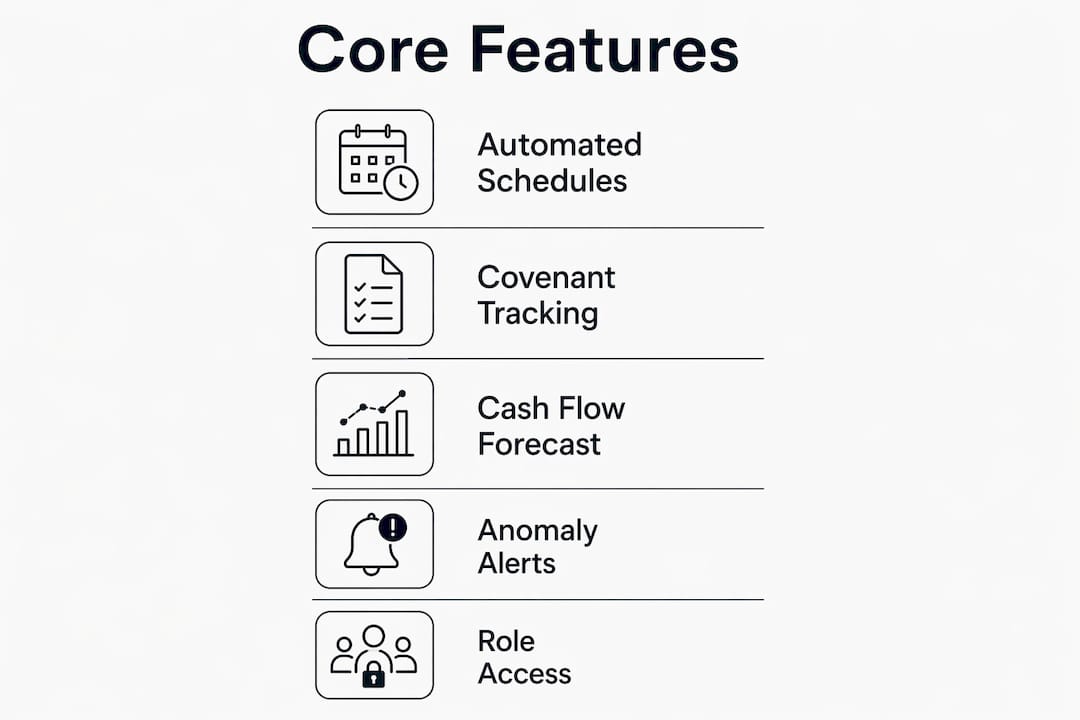
Pro Tip: When evaluating platforms, ask specifically whether covenant monitoring is native or bolt-on. Native monitoring shares the same data model as your debt instruments; bolt-on tools require a separate data feed that can lag or break.
Key features to look for:
- Compliance dashboards with covenant headroom visualization
- Multi-level approval workflows configurable by instrument type and amount
- Multi-currency support with day-count convention flexibility
- Full audit trail attributed to user, session, and organization
- GL journal entry export ready for upload without reformatting
Why fragmented debt management systems create real compliance risk
Running debt management across three or four disconnected tools — a spreadsheet for schedules, a separate covenant tracker, a standalone GL — isn't just inefficient. It's a compliance liability.
Fragmented systems force manual data re-entry at every handoff point. Each transfer is an opportunity for a version mismatch, a stale figure, or a missed update. Agencies that switch from fragmented setups typically eliminate multiple vendor contracts and reduce the manual work that creates compliance exposure. That's not a minor operational improvement; it's a structural risk reduction.
Integrated platforms solve this by maintaining a single source of truth. When a debt instrument changes — a draw on a revolver, a rate reset, a covenant waiver — every downstream calculation updates automatically. No one is reconciling two versions of the same schedule.
Integration benefits that matter most:
- Seamless data flow from debt instruments to cash flow forecasting
- Unified reporting across all debt types without manual consolidation
- Improved data governance through private or dedicated infrastructure
- Elimination of duplicate records and version-control failures
- Transparent payment arrears tracking for higher collection rates
Automated dunning and systematic monitoring of payment arrears also improve transparency and recovery rates for teams managing in-house receivables. FINNOFLEET's research on receivables management confirms that systematic automation of these processes is the clearest driver of collection performance.
The compliance case for integration: Fragmented debt management exposes organizations to significant compliance risk. Integrated platforms mitigate that risk through centralized data, automated alerts, and a single audit trail — not through better spreadsheet discipline.
Peregrine: AI-driven debt and financial management built for QuickBooks Online
Peregrine takes a different approach than legacy treasury platforms. Instead of requiring a separate enterprise system, it integrates directly with QuickBooks Online and layers AI-powered automation on top of the accounting data your team already maintains.
The platform automates month-end close, cash-flow forecasting, and debt schedule tracking, then surfaces anomalies before they become problems. If a debt payment hits at an unexpected amount or a cash position drifts outside normal range, Peregrine flags it in plain English — no SQL query, no custom report required. That's the practical difference between a dashboard that shows you data and one that tells you what to do about it.
| Capability | Peregrine | Generic Industry Standard |
|---|---|---|
| QuickBooks Online integration | Native, real-time sync | Manual export/import or third-party connector |
| Covenant and debt tracking | Automated with AI monitoring | Manual or spreadsheet-based |
| Cash-flow forecasting | AI-driven, customizable | Static templates |
| Anomaly detection | Real-time, plain-English alerts | Periodic manual review |
| Role-based access | Multi-client, configurable | Basic user permissions |
| Board pack / reporting | Automated generation | Manual compilation |
Multi-client role-based access means a CFO, a controller, and an external advisor can each see exactly what they need without sharing credentials or over-exposing sensitive data. For firms managing multiple entities, that's not a convenience feature — it's a governance requirement.
Pro Tip: Use Peregrine's anomaly detection as an early-warning system for debt covenant proximity. When cash flow forecasts shift, the platform surfaces the downstream impact on debt coverage ratios before your next lender reporting date.
How to choose debt management software for your business
Start with automation depth. A platform that automates debt schedules but still requires manual GL entry hasn't solved the core problem — it's just moved it downstream. Look for end-to-end automation from instrument setup through journal entry export.
Workflow configurability is the second filter. The best platforms mold to your business processes rather than forcing you to adapt to theirs. CreditSoft, which has served credit counseling and debt management organizations since 1996, built its entire product philosophy around this: screens, workflows, and reports configured to match how you actually work. That principle applies equally to corporate finance platforms.
Security architecture deserves more scrutiny than most buyers give it. Private or dedicated cloud deployments keep sensitive debt data off shared infrastructure, which matters for both compliance and data governance. Check whether the platform supports role-based access controls and real-time audit logging at the field level, not just the user level.
Selection criteria checklist:
- End-to-end automation from debt instrument to GL entry
- Configurable workflows that match your approval and review processes
- Private or dedicated cloud deployment with audit logging
- Native integration with your ERP or accounting platform (QuickBooks, SAP, etc.)
- Covenant monitoring at facility and tranche level with real-time alerts
- Reporting outputs that meet your lender, board, and audit requirements
Pro Tip: Before committing to a platform, run a parallel pilot using three months of real historical debt data. If the system can't replicate your existing schedules accurately within the trial period, it won't handle edge cases in production.
For a broader view of how debt management fits into your overall finance tech stack, the integration layer between your debt platform and your accounting system is where most implementations succeed or fail.
Cloud-based vs. on-premise: which deployment model fits your team?
The deployment question is less about technology preference and more about data control and IT capacity.
Cloud-based platforms offer faster implementation, automatic updates, and lower upfront infrastructure cost. Most modern corporate finance teams default here because the vendor manages security patches and uptime. The risk is shared infrastructure — on a standard multi-tenant cloud, your data sits alongside other organizations' data.
Private or dedicated cloud deployments address that risk directly. Your data runs on infrastructure you control or that is dedicated exclusively to your organization. Debt management agencies and corporate finance teams handling sensitive lender relationships consistently prefer this model. DebtMaster EVO, built by Comtronic Systems, runs on a private PostgreSQL deployment specifically to prevent data commingling — a design choice that reflects the compliance expectations of serious collection and finance operations.
On-premise deployments give maximum control but require internal IT resources to maintain. For most mid-market businesses, the operational overhead outweighs the control benefit unless regulatory requirements mandate it.
The practical answer for most finance teams in 2026: a private or dedicated cloud that combines the operational convenience of SaaS with the data governance of on-premise.
What effective debt management software looks like in practice
Consider a mid-size company managing a revolving credit facility, two term loans, and a capital lease portfolio. Without a dedicated platform, the finance team typically maintains separate spreadsheets for each instrument, manually calculates interest accruals at month-end, and tracks covenant compliance through a shared document that someone updates quarterly.
With an integrated platform, every instrument lives in one system. Draw activity on the revolver updates the available capacity automatically. Interest accruals post to the GL without a staff accountant building the calculation. Covenant headroom is visible on a dashboard updated daily, not quarterly. When the company approaches a leverage ratio limit, the system fires an alert — giving the CFO two weeks to address it rather than discovering the issue during lender reporting.
The month-end close automation impact is measurable: teams that previously spent several days reconciling debt schedules and posting journal entries manually can complete the same work in hours. The accuracy improvement is harder to quantify but arguably more valuable — fewer restatements, cleaner audits, and lender relationships that don't get strained by reporting errors.
Implementation challenges and how to avoid them
The most common implementation failure isn't technical. It's data migration. Finance teams underestimate how much cleanup is required to move historical debt data from spreadsheets into a structured system. Instruments with mid-life amendments, rate resets, or partial paydowns require careful reconstruction before the platform can generate accurate forward schedules.
Three practices that consistently improve adoption outcomes:
Start with a data audit. Before implementation begins, map every active debt instrument, confirm outstanding balances against lender statements, and document all covenant terms. Gaps discovered during implementation extend timelines and erode confidence in the new system.
Configure workflows before go-live. Approval chains, notification rules, and reporting templates should be set up and tested with real users before the platform goes live. A system that requires workarounds on day one rarely gets used the way it was designed.
Train on scenarios, not features. Users who understand how to process a rate reset, record a covenant waiver, or handle a partial prepayment will adopt the platform faster than users who received a feature walkthrough. Scenario-based training also surfaces configuration gaps before they become production problems. For teams using Peregrine, the implementation guide walks through this process with QuickBooks-specific context.
Key Takeaways
Integrated debt management software reduces compliance risk, eliminates manual GL entry errors, and gives finance teams real-time covenant visibility — capabilities that fragmented spreadsheet-based systems structurally cannot provide.
| Point | Details |
|---|---|
| Centralization is the foundation | All debt instruments in one system of record eliminates version conflicts and manual reconciliation. |
| Automation depth determines value | End-to-end automation from instrument setup to GL journal entry is the standard that separates capable platforms from partial solutions. |
| Covenant monitoring must be native | Native tracking at facility and tranche level fires alerts before breaches; bolt-on tools lag and create compliance gaps. |
| Deployment model affects data governance | Private or dedicated cloud deployments keep sensitive debt data off shared infrastructure and support tighter compliance control. |
| Peregrine for QuickBooks teams | Peregrine automates debt tracking, covenant monitoring, and cash-flow forecasting natively within QuickBooks Online, with AI anomaly detection and role-based access. |
CFO-grade debt visibility without the enterprise price tag
Most enterprise debt management platforms were built for treasury teams at large corporations. Peregrine was built for the finance teams that actually run most businesses: owners and controllers who need CFO-grade visibility without a six-figure software contract or a dedicated IT team to maintain it.
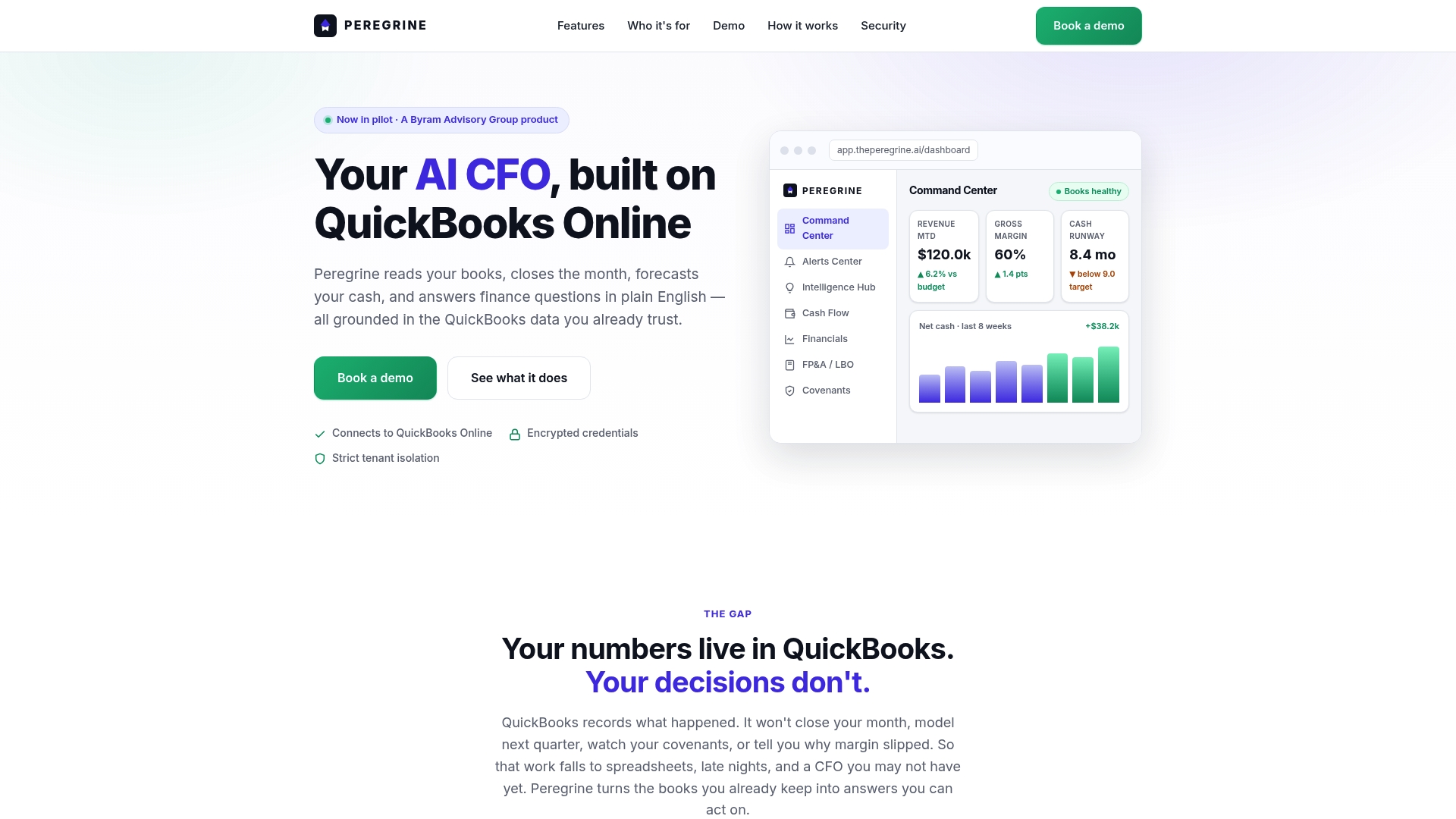
Because Peregrine integrates directly with QuickBooks Online, your existing accounting data becomes the foundation for automated debt schedules, covenant tracking, and cash-flow forecasting — no parallel data entry, no separate system to reconcile. The AI layer surfaces anomalies and covenant proximity alerts in plain English, so your team acts on insights rather than hunting for them in reports.
For business owners and finance teams who want real-time debt visibility, automated month-end close, and board-ready reporting without rebuilding their accounting infrastructure, Peregrine is the direct path. See what Peregrine does for teams already on QuickBooks Online, or explore the implementation process to understand what onboarding actually looks like.